




Monthly
$4.99
per month
Join the waitlistPersonal race intelligence · iPhone
RaceVector models your finish time on every race in the catalogue, then tells you whether the one you entered is still the right call.
The training was the easy part.
The course changes.So does your potential.
Make the next one count.
RACEVECTOR
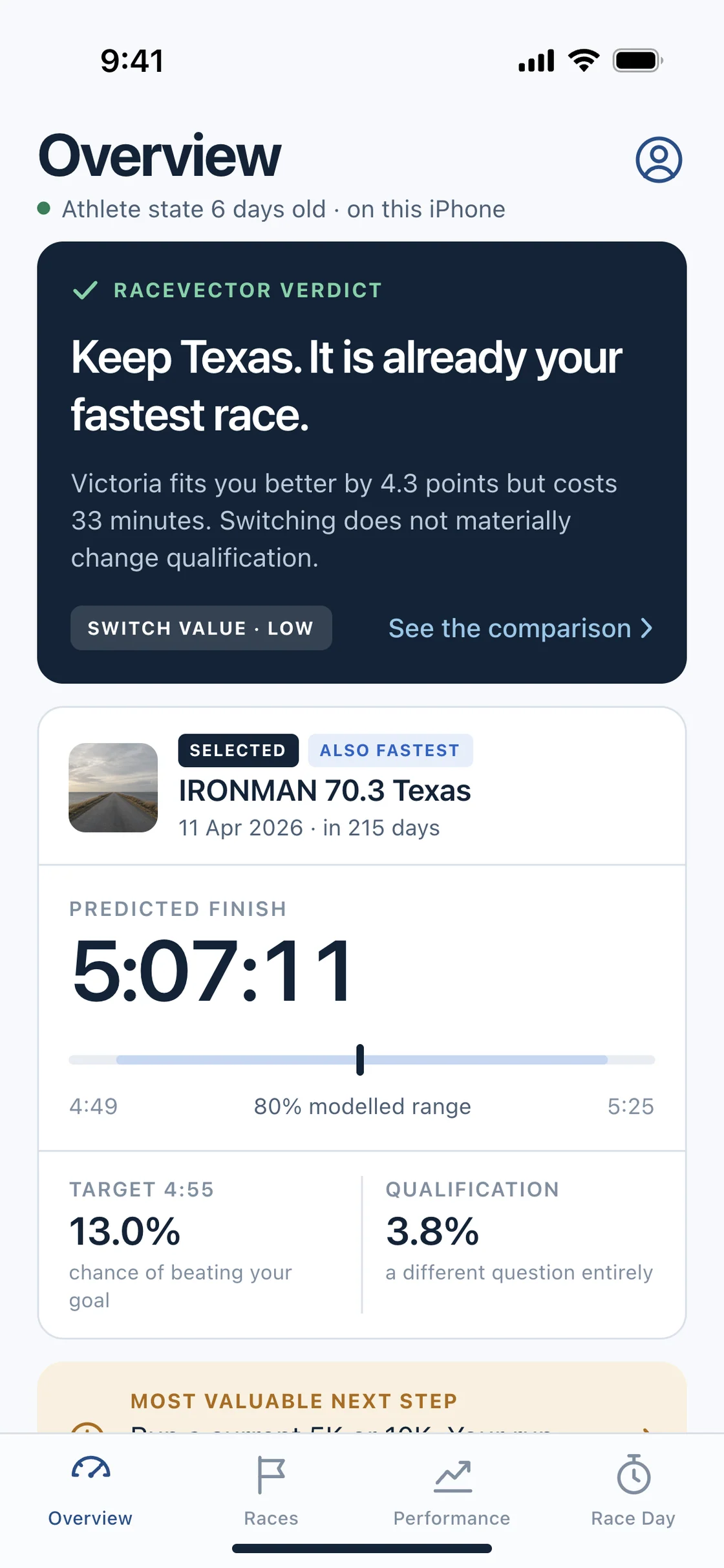
It opens on the answer
Every time your numbers change it re-runs the comparison and returns one of five answers about the race you already entered — and prices the alternative in minutes and points.
Still the right call.
Another course suits you better. Here's what the fit costs you.
Another course is faster for you, and the gap survives the uncertainty.
Switching moves your slot odds enough to matter.
It doesn't know yet, and says which number is missing.


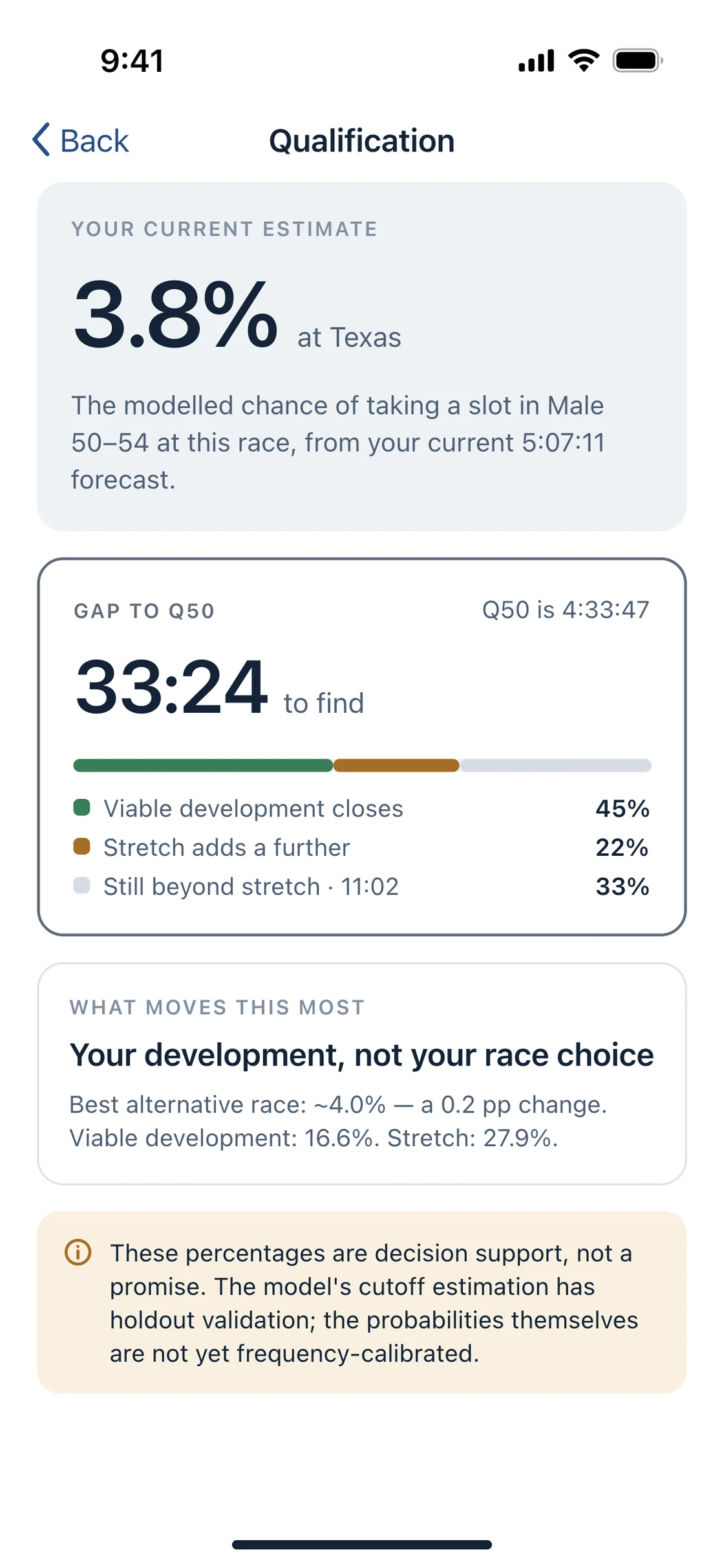
What you get
A handful of numbers — recent race times, your thresholds, the goal you are chasing. That is the whole setup, and it takes minutes.

Keep or switch, stated plainly, with the cost of the alternative in minutes and points. It opens on the answer.
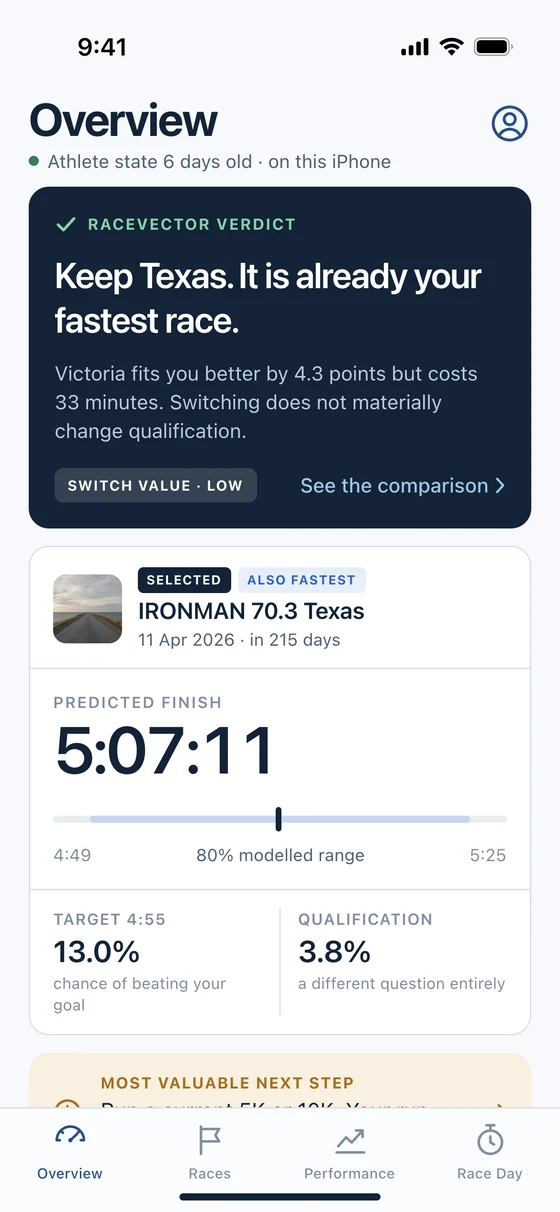
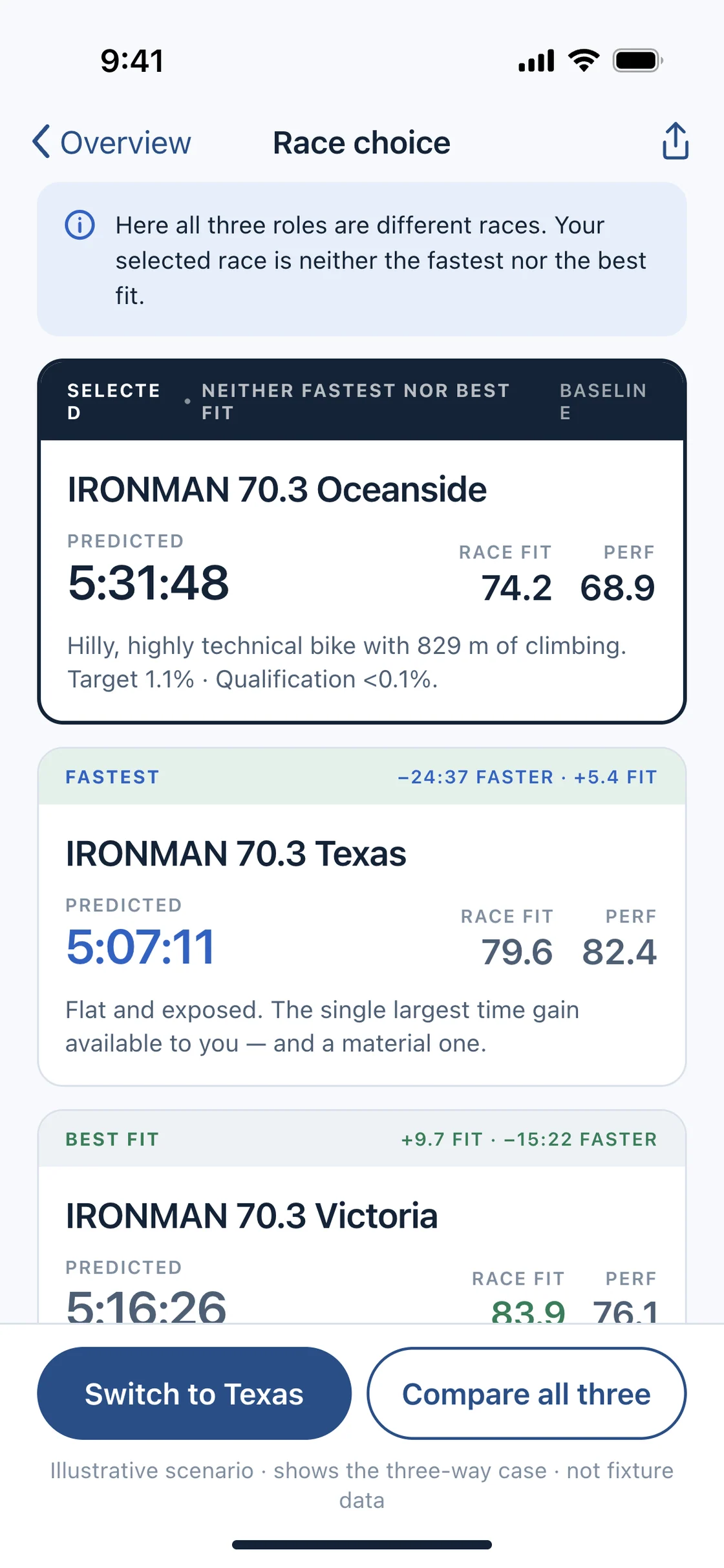
Selected, Best Fit and Fastest side by side. When they disagree you see exactly what each choice costs you.
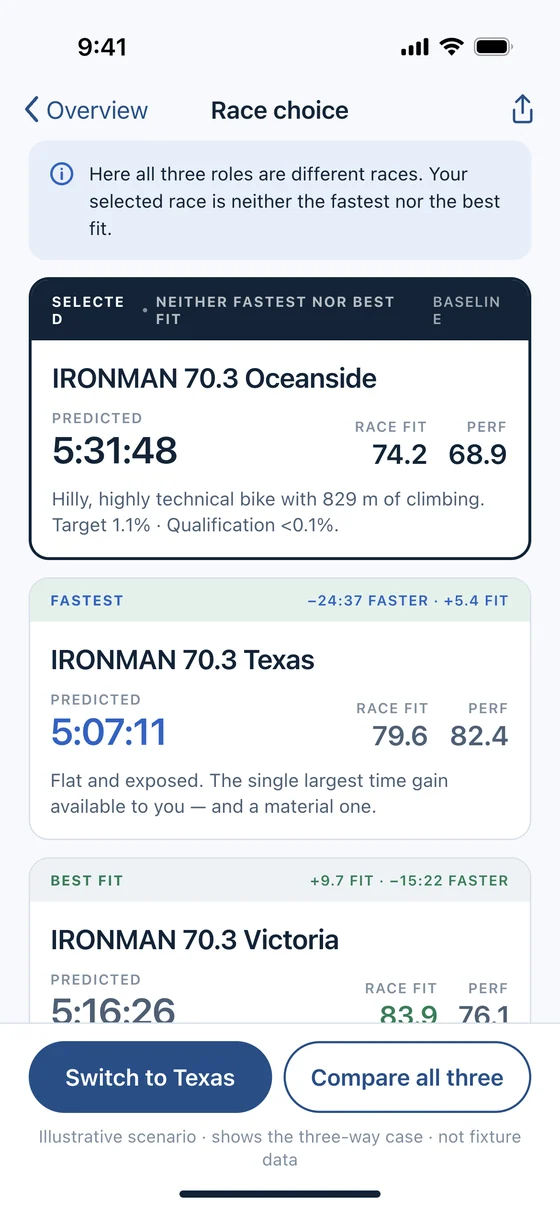
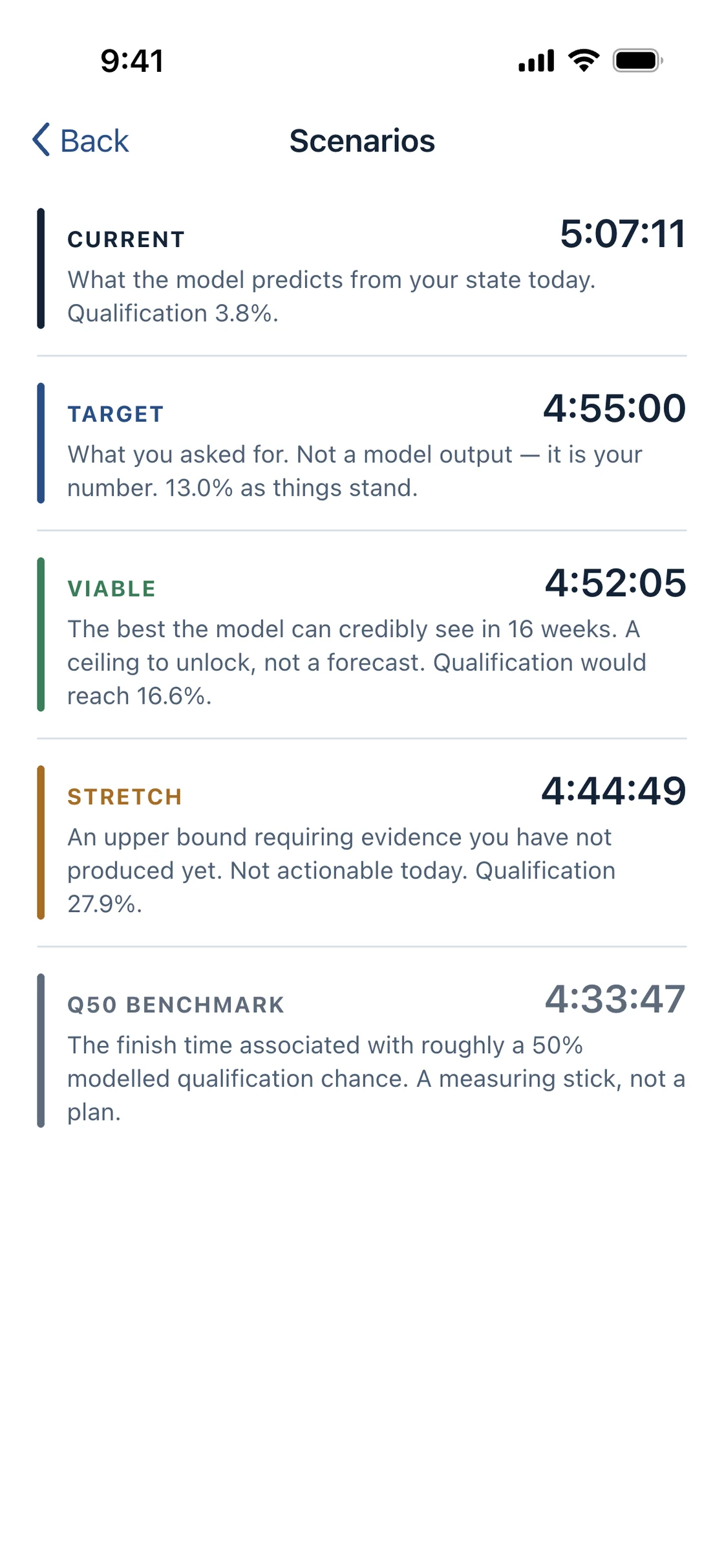
A predicted finish and the eighty-per-cent range around it. Current, Target, Viable, Stretch and Q50 kept apart, never blurred into one goal.
Swim, bike and run scored separately against the conditions expected on that date, each with the data confidence behind it.

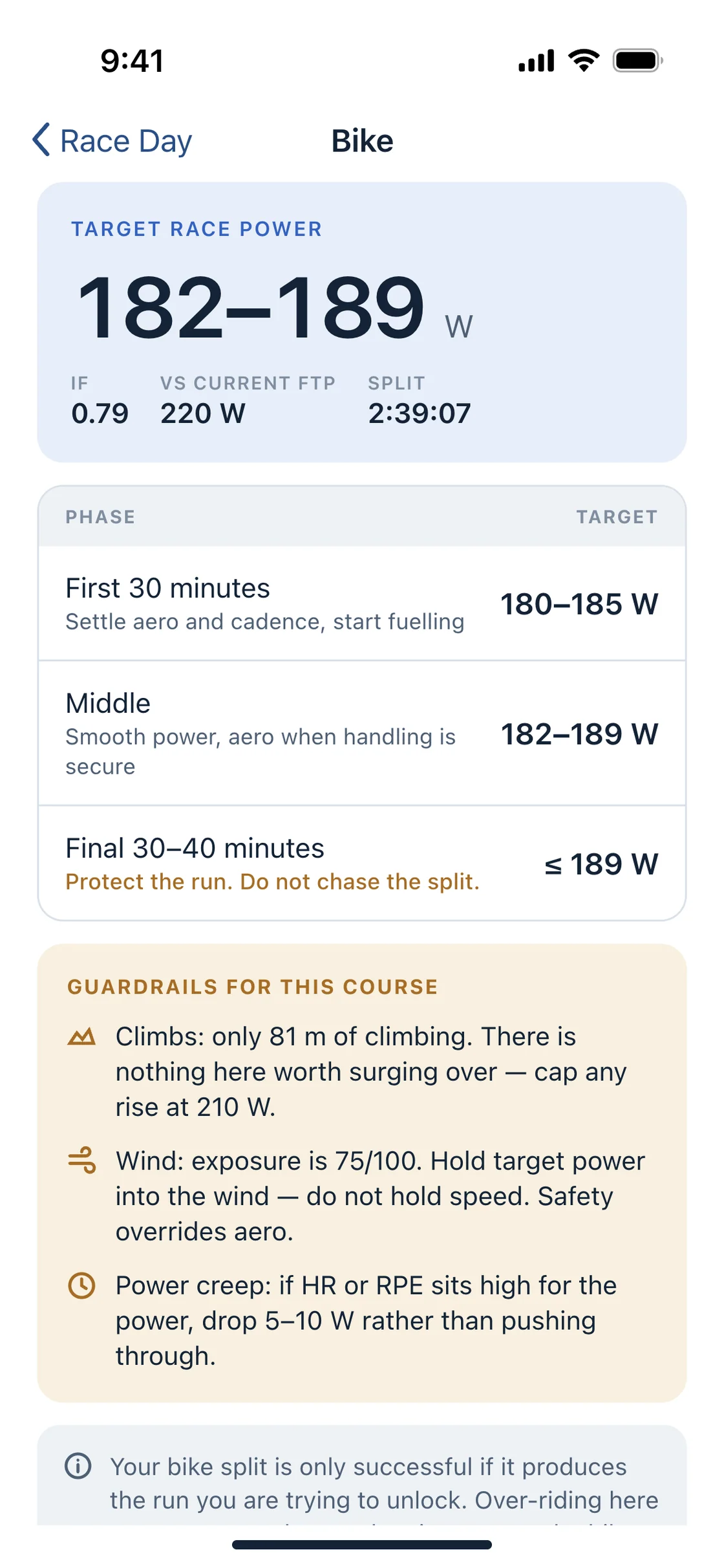
Watts, intensity factor and guardrails that state the run cost before you override them. Bike and run are coupled.
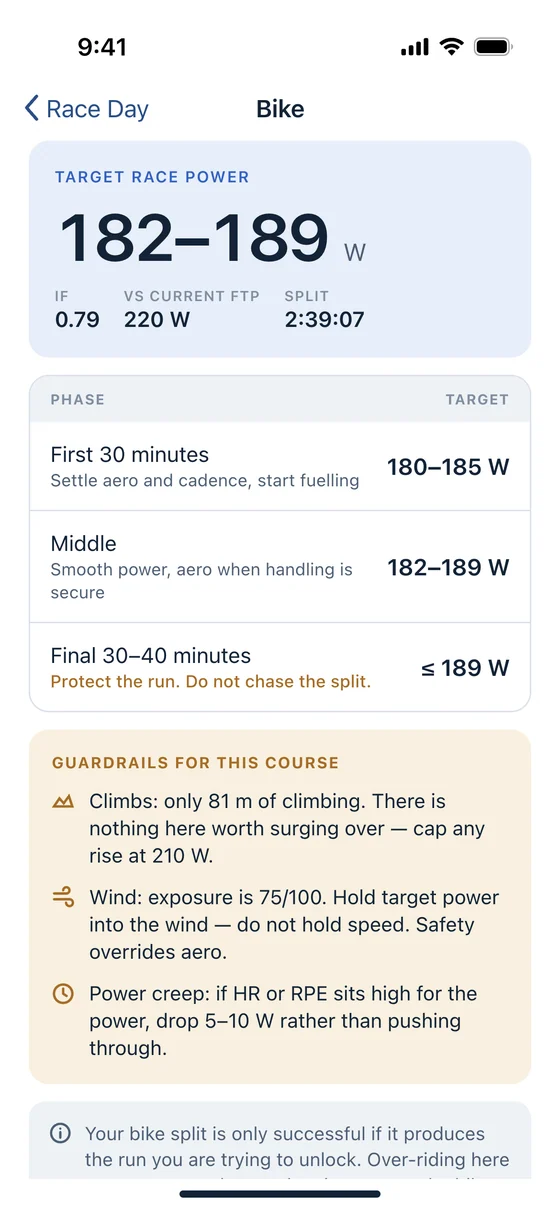
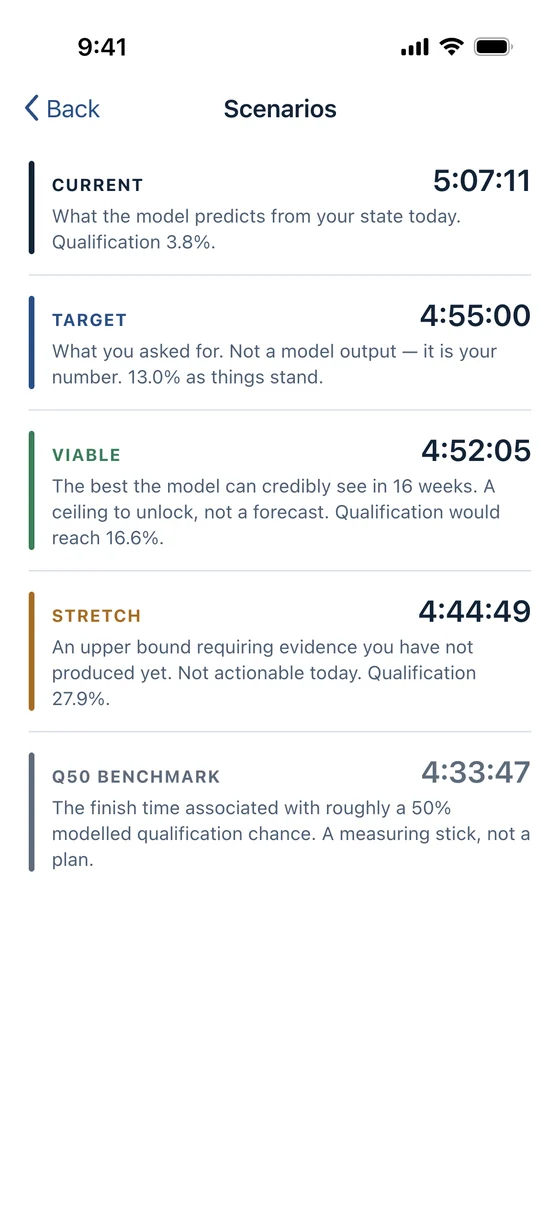
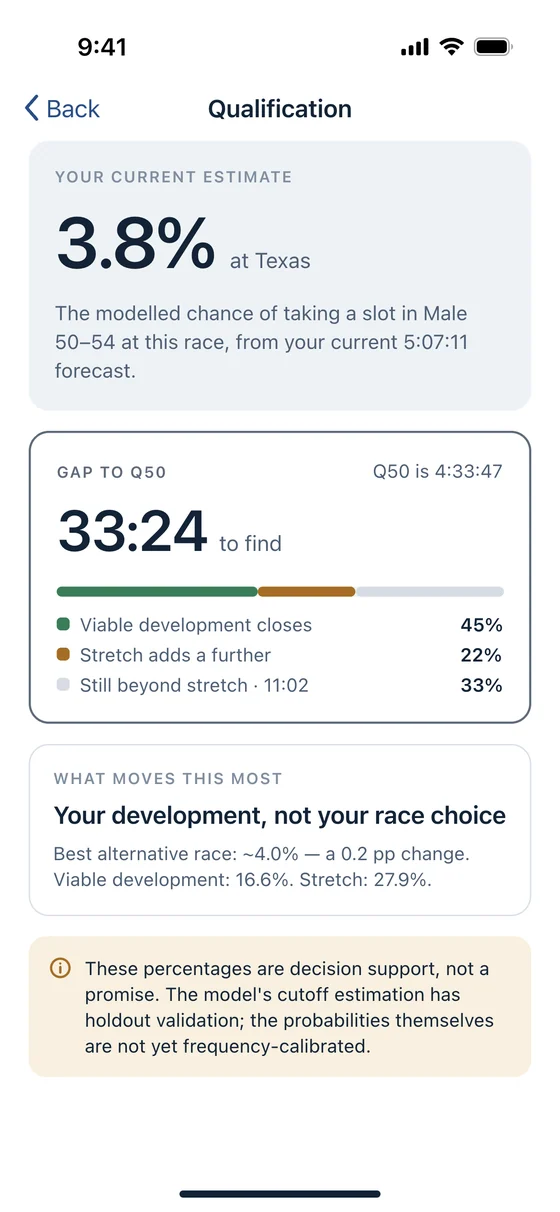
Slot odds as their own question with their own uncertainty, never merged into your goal-time probability.
Three roles
The race you entered. The one that suits you. The one you'd be quickest at. Often three different races — and when they disagree, the trade is priced rather than hidden.
The forecast
A predicted finish with the eighty-per-cent modelled range around it. Under that, five figures that most tools blur together — Current, Target, Viable, Stretch and Q50 — kept apart.
Target probability
0.0%
Beating your goal time. Illustrative.
Qualification probability
0.0%
Taking a slot. A different question. Illustrative.
Two different questions, never merged into one flattering number.
Race day
Watts, intensity factor and guardrails that state the cost of overriding them before you override them. Swim approach, run pacing and fuelling built from the legs you'll actually have.
After the race
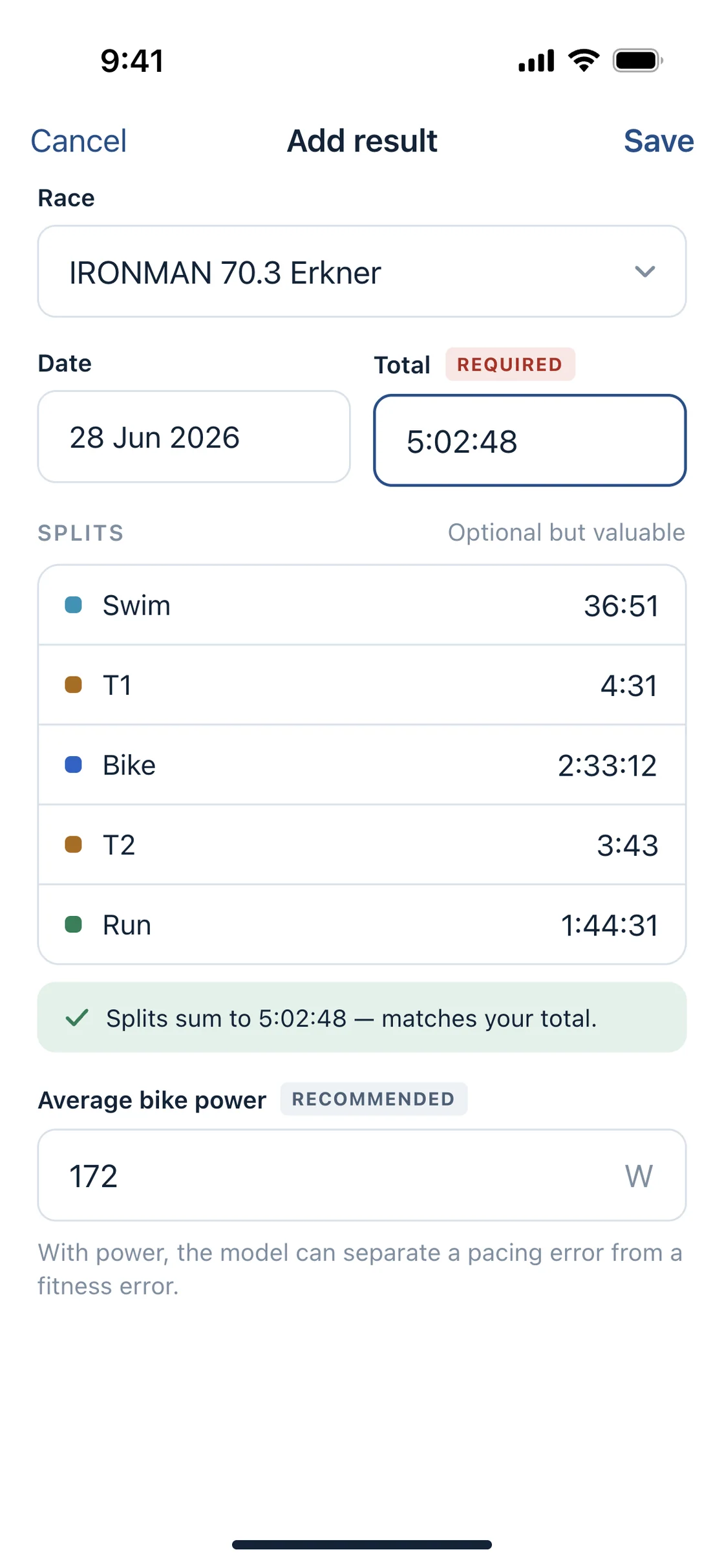
Enter your splits. It reconciles them against your total, flags what doesn't add up, and scores its own forecast against what actually happened — so the next one is better.
Founding pricing
Monthly
$4.99
per month
Join the waitlistAnnual
$29.99
per year · 3-day trial
Join the waitlistLifetime
$39.99
once, then never again
Join the waitlistNot yet on the App Store, and no claim is made about review or approval. Nothing is charged today — founding pricing is held against your place on the waitlist. Prices in USD.